
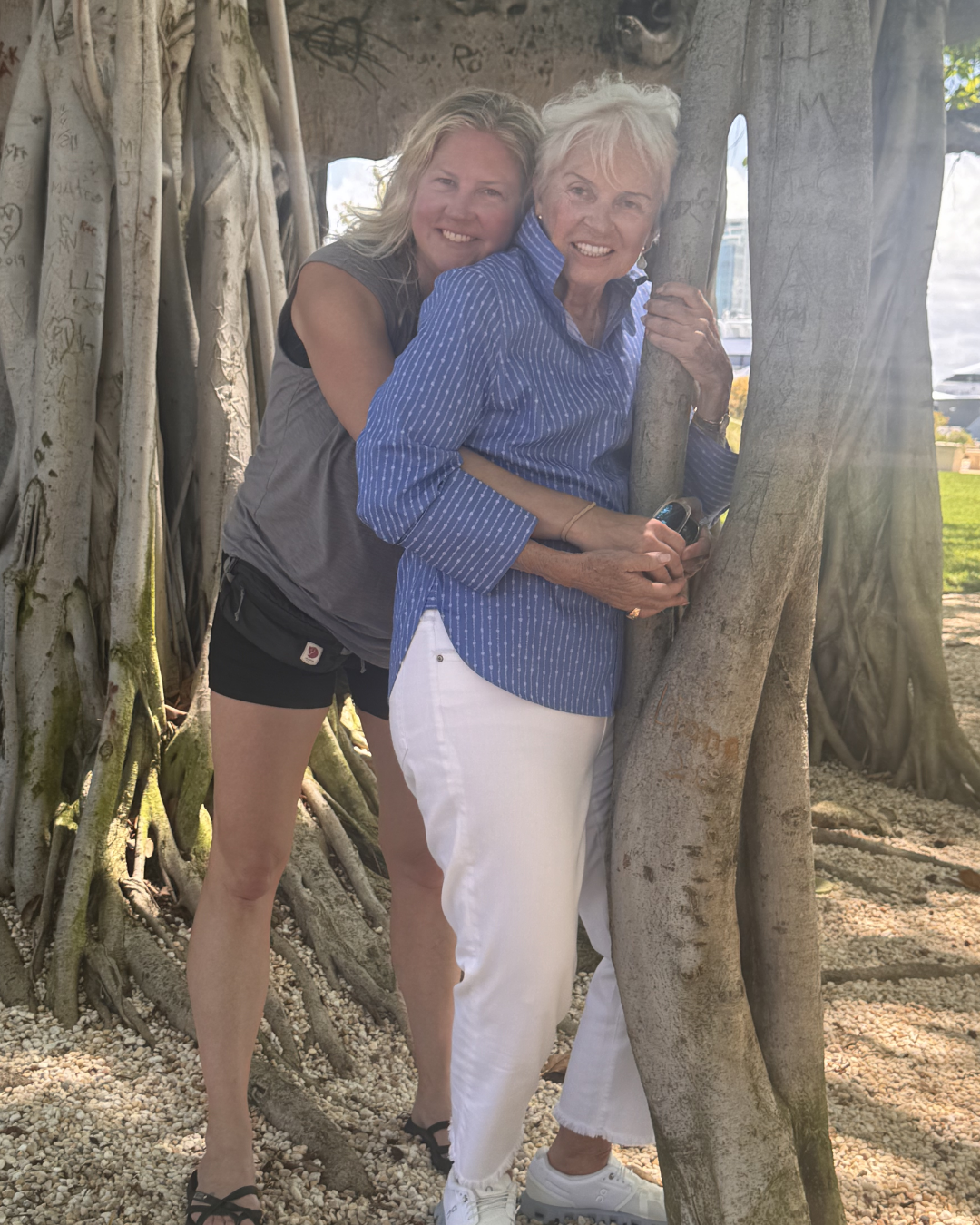
Over the 2025 holidays, our family learned that my mom's triple-negative breast cancer had returned. After several years in remission, it had metastasized to multiple organs, with numerous tumors throughout her body.
The news was devastating, but it also brought us face-to-face with difficult questions. At 78 years old, with an aggressive form of cancer, should my mom pursue chemotherapy and radiation? It became less a question of extending life and more a question of what kind of life she wanted to live with the time she had left.
After thoughtful conversations, my mom chose not to pursue treatment—a decision I fully supported. Chemotherapy and radiation may have given her a little more time, but likely at the cost of feeling profoundly ill. Instead, she chose to spend her remaining months living as fully as she could.
It turned out to be a beautiful choice.
From January through June, there was a steady stream of family and lifelong friends coming to see her, many traveling great distances for one last visit. I flew from Colorado to Florida at least once a month, sometimes twice. Rather than spending those months in treatment rooms, she spent them surrounded by the people she loved. There was laughter, storytelling, shared meals, old memories, and quiet moments of simply being together. For much of that time, she was comfortable enough to truly enjoy it all. It wasn't until late April that we began leaning on hospice to help manage her pain.
I was my mom's health surrogate. It was one of the most meaningful responsibilities I have ever carried—and one I learned as I went. Every decision felt significant. I found myself balancing medical conversations with deeply human ones, advocating for her wishes while slowly absorbing the reality that I was preparing to lose my mother.
Those six months became an embodied lesson in paradox. I found myself inhabiting two realities at once. Every day felt like a pendulum swing. One moment I was discussing medications, learning the stages of dying, signing legal documents, and helping make end-of-life decisions. The next, I was back in Colorado loving my family, spending time with friends, seeing clients, and trying to continue the life I had built.
I was learning to hold both—to laugh wholeheartedly one day and grieve deeply the next, to be fully present with the life that was still unfolding while quietly acknowledging that nothing about my own life would ever be the same.
During those six months, I witnessed an extraordinary outpouring of love for my mom. After she died, I realized I had been given that very same gift. My family carried me. Friends always checking in with me. My clients extended a level of grace and compassion that I will never forget. As someone whose profession is centered around holding space for others, I worried that my grief might somehow diminish my ability to care for them. Instead, I discovered something profoundly human: healing doesn't require one person to have it all together. Sometimes the deepest healing happens when two people simply meet each other honestly in the fullness of the human experience. My clients reminded me that authentic presence can be more powerful than polished composure.
Looking back, I realize this season was never defined solely by loss. It was also defined by what grief quietly revealed. It revealed the depth of community that surrounded me. It revealed that receiving love can be just as transformative as giving it. It revealed that healing is not reserved for those who have everything figured out, but for those willing to meet one another with honesty and presence. Most unexpectedly, grief expanded my capacity for gratitude. Even in the midst of profound sorrow, I found myself noticing extraordinary beauty: one more conversation, one more shared meal, one more laugh, one more chance to say thank you. Loss has illuminated just how precious ordinary moments really are.
Perhaps that shift in perspective didn't begin with me at all. It began with my mom. She was eloquently contradictory.
She was an introverted socialite—someone who cherished solitude yet cultivated deep, lasting friendships. She was deeply rooted in her Christian faith while remaining endlessly curious about other spiritual traditions. Her faith was never fragile. Curiosity didn't threaten it; it expanded it.
That curiosity became part of my childhood. Watching my mom navigate both deep Christian faith and genuine spiritual curiosity gave me an unexpected gift. She taught me that faith and curiosity don't have to compete. Because of her, I have never felt confined to one expression of the sacred. Instead, I have learned to trust that truth can reveal itself in many traditions while remaining deeply connected to God.
As a kid I often accompanied my mom to A Course in Miracles study groups. I remember sitting there wondering who this mysterious "Ego" was that everyone kept talking about. Around that same time, we attended a fire walk together. What a gift to chase my mom across hot coals.
She never experimented with recreational drugs, but when she traveled with the Pachamama Alliance she participated in an ayahuasca ceremony. To some, these interests might seem contradictory. To my mom, they were simply different paths toward understanding the mystery of being human.
Those she loved never truly disappeared from her life even though they had passed away. Their presence simply changed form. When she was in college, cancer took her mother. Two decades later, one of her sisters was murdered in an act of domestic violence. About twenty years after that, she lost her father. Rather than ending those relationships, grief transformed them. Through dreams, memories, symbols, and moments she couldn't quite explain, the people she loved continued to accompany her. She spoke of them not as distant memories but as enduring relationships.
For the last twenty-five years of her life, she worked with a Jungian analyst. Through dreams, active imagination, and deep inner work, the presence of her mother, sister, and father continued to unfold in meaningful ways. She also studied with Marion Woodman, whose work wove together Jungian psychology, mythology, the body, and the sacred feminine. Through all of these explorations, one thing remained unwavering: her faith in God. God was always her anchor.
In my mom's final days, hospice began crisis care, administering medication that allowed her to remain deeply asleep and comfortable. My siblings and I spent hours at her bedside. We talked to her, read aloud, held her hand, and believed she could still hear every word. We even had a dance party around her bed—because if anyone deserved music and laughter in their final days, it was my mom. One of my brothers, a quadriplegic living in California, wasn't able to travel to Florida. In moments like these, technology became a profound gift. Through FaceTime he was able to be fully present with her. He wrote a beautiful song for our mom and sang it to her from across the country. Even separated by thousands of miles, love found its way into the room.
One evening, I read aloud a journal entry she had written years earlier describing the profound presence she had felt from Marion Woodman. That entry prompted me to search for Marion's own writings, hoping I might find words that would comfort my mom as she prepared for death.
I came across a passage that was absolutely profound. Marion wrote that when we are dying, we often believe we are leaving home, when in fact we are returning home.
Something inside me softened.
Until that moment, I had been grieving how much I was going to miss my mom. But hearing those words, I realized that love sometimes asks us to let go.
Through a steady stream of tears, I gave my mom permission to die. I thanked her for everything she had given me. I told her she no longer had to work so hard to stay alive. I told her that her mother, her sister, and her father were waiting for her—that she could go home.
Then I kissed her goodnight.
Forty-five minutes later, I was awakened by the hospice nurse. She spoke two words that will forever be etched into my soul.
"It's time."
I leapt out of bed and ran across the apartment, calling for my sister.
Together we gathered around my mom's bedside and held her as she took her final breath.
Or perhaps, as Marion would have said...
...as she returned home.